In Kitchener, the legacy of the Laurentide Ice Sheet left behind a complex deposit of Waterloo Moraine and soft glaciolacustrine silts. When we start a stone column design, our first step is always looking at the borehole logs from the specific concession. You can’t just assume a standard aggregate gradation will work; the high water table near the Grand River watershed often forces us to adjust the vibro-replacement feed rate. We’ve seen projects where the native clay has undrained shear strengths below 20 kPa, and that’s where aggregate interlock becomes the critical performance factor. Before committing to a full grid, we often recommend ground truthing with a CPT test to map the precise thickness of the compressible layer beneath Kitchener’s industrial parks.
In Kitchener’s soft silty clay, the stone column doesn’t just carry the load—it works as a vertical drain, accelerating primary consolidation by months.
Scope of work
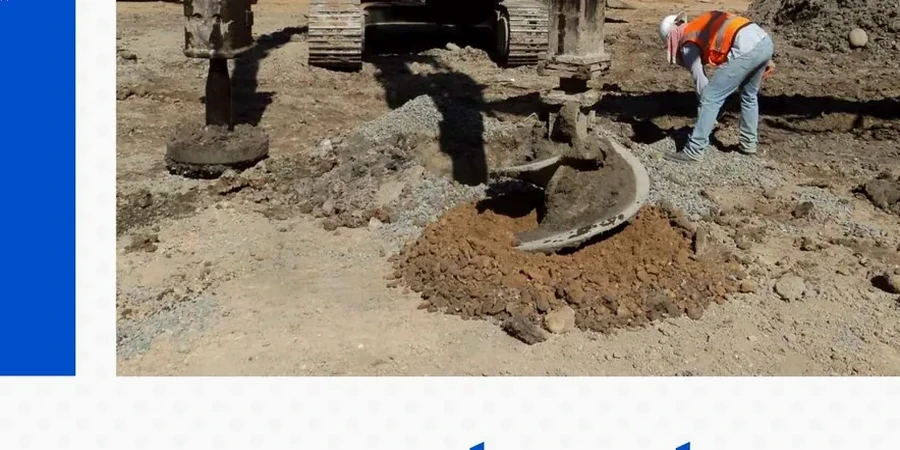
Site-specific factors
The freeze-thaw cycles in Kitchener present a real risk to stone columns that terminate too close to the frost line. We see a penetration depth of at least 1.2 meters below finished grade as non-negotiable here, per the Ontario Building Code frost protection requirements. Another silent risk is lateral spreading in the soft silts if the stone column grid isn’t extended at least 2 meters beyond the loaded footprint—we’ve observed edge failures because of this in expansions near Fairway Road. A poorly executed bottom feed can also create a bottleneck of fines-contaminated stone, turning the column into a stiff inclusion rather than a draining column, which negates the consolidation benefit entirely.
Reference standards
NBCC 2015 (National Building Code of Canada), CSA A23.3-14 (Design of Concrete Structures – Ground Improvement Context), ASTM D2487 (Unified Soil Classification for design input), OPSS 206 (Ontario Provincial Standard for Aggregates)
Linked services
Pre-Design CPT Testing
We run electric cone penetration tests to map the compressible clay thickness and detect any sand stringers that might short-circuit the drainage path.
Settlement Performance Monitoring
After column installation, we use settlement plates and magnetic extensometers to verify that the predicted consolidation rate matches the field data.
Load Test Verification
We execute single-column load tests and zone tests to confirm the modulus of the improved ground before the structural slab is poured.
Aggregate Quality Inspection
Our lab checks the Los Angeles abrasion value and gradation curve of the backfill stone to ensure it meets Ontario’s OPSS 1004 standard for drainage and durability.
Typical parameters
Quick answers
How deep can stone columns be installed in Kitchener’s glacial deposits?
We typically design columns up to 15 meters deep in this region. The depth is limited by the dense basal till layer; once the vibroflot hits refusal on the Halton Till, that’s the natural bearing stratum.
What is the typical cost range for a stone column design package in Kitchener?
A full design package, including site investigation review and settlement analysis, typically ranges from CA$2,020 to CA$6,150 depending on the complexity of the load case and the footprint size.
Does the high groundwater in the Grand River watershed affect the installation?
Definitely. The water table is often just 1 to 2 meters below grade. We usually switch to a wet top-feed method here to keep the hole stable, and we’ll use a coarser aggregate to prevent washout during the compaction lifts.
Can you design stone columns right next to existing foundations in Kitchener’s older neighborhoods?
Yes, but we need to be careful with vibration amplitude. In tight spaces like near heritage structures downtown, we reduce the vibroflot power and use an off-set grid to avoid lateral displacement that could crack the adjacent footings.